













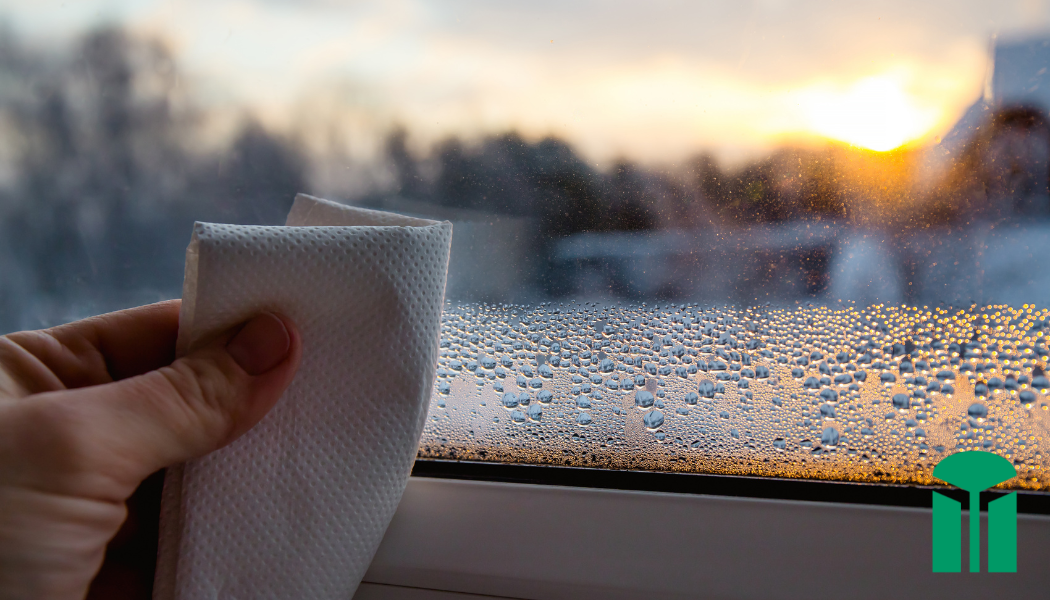
Do you ever have what seems to be water blocking the view while also dripping all over
the floor? Or are you noticing water that is freezing on the glass or your windows?
Condensation is the fog that suddenly appears in cold weather on the glass of windows
and sliding doors. But believe it or not, it’s not your windows that are causing this problem.
Foggy windows and doors are only indicators that humidity could be damaging your home.
What causes window condensation?
Window condensation is the result of excess humidity in your home. The glass provides a
cold surface on which humidity can visibly condense to. The fog on your windows is a form
of condensation; so is the water that forms on the outside of a glass of iced tea in the
summer and on the bathroom mirrors and walls after someone takes a hot shower.
Condensation usually occurs first on windows because glass surfaces have the lowest
temperature of any of the interior surfaces in the house, especially in the winter. When the
warm moist air meets the cooler glass surfaces, the moisture condenses.
Where Does the Humidity Come From?
Humidity is water vapor or moisture in the air. All air contains a certain amount of moisture,
even indoors. There are many things that generate indoor moisture; humidifiers, heating
systems, and even plants. Cooking three meals a day adds four or five pints of water to the
air. Each shower contributes ½ pint. In fact, every activity that uses water (like dishwashing,
mopping floors, doing laundry) adds moisture to the air.
How Can You Reduce Humidity?
The key to reducing humidity is to control the sources of moisture and increase ventilation
in your home.
- Opening a window or door in each room for just a few minutes allows the stale, humid
air to escape and allows fresh new air to enter. - Vent all gas burners, clothes dryers, etc. to the outdoors.
- Keep basements as dry as possible. Waterproof floors and walls and run a dehumidifier
if necessary.
Remember, windows DO NOT cause condensation.
To learn more about condensation on your windows and humidity in your home, click HERE.