













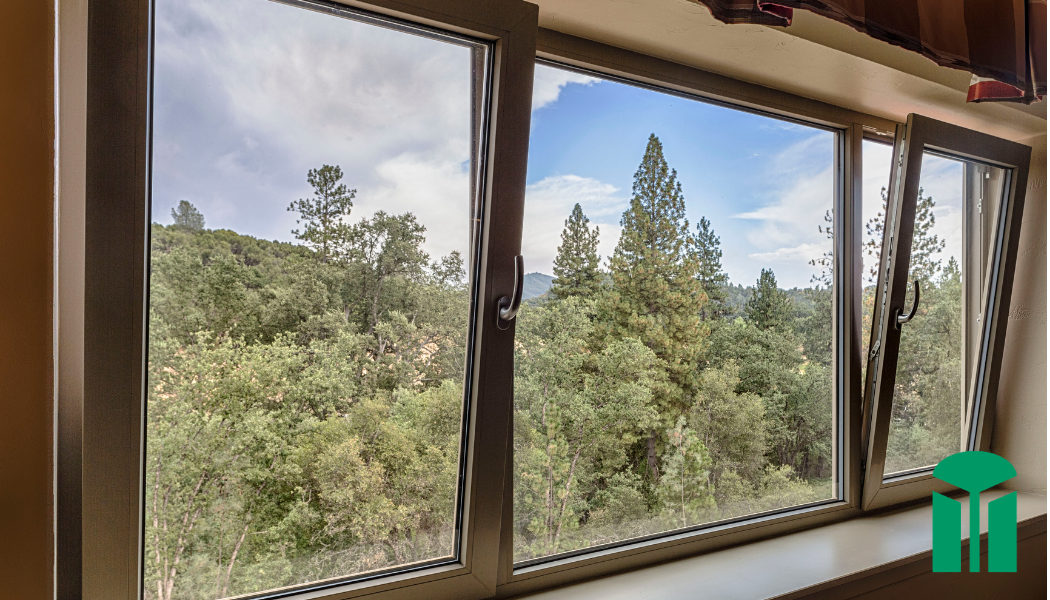
You've probably seen them without knowing what to call them. A window with no visible screen, a slim handle on the side instead of a crank or a lock at the top, and a sash that seems to open two completely different ways depending on how you turn it. That's a European tilt and turn window, and it's quickly becoming one of the most requested window styles among US homeowners who are building new or replacing what they have.
This style isn't new. It's been the standard in Germany, Austria, and Scandinavia for decades, for the simple reason that it works better than the alternatives. What's new is that it's finally becoming accessible in the US, and homeowners who've experienced it, whether through travel, a remodel magazine, or a neighbor's new build, are asking for it by name even when they don't quite know what it's called yet.
Here's what's driving the shift, and why the Euro Series is worth a look if you're one of the homeowners noticing the trend.
It Solves a Problem Traditional Windows Don't
Most American homes are built with double-hung or casement windows, and both do their job well. But they only give you one way to open the window. A double-hung window slides up. A casement window cranks outward. If you want airflow, you get airflow, whether it's a light breeze on a mild evening or a gust during a storm.
A tilt and turn window gives you a choice. Tilt the sash and the top angles inward a few inches while the bottom stays locked in place, so you get ventilation without leaving the window wide open. Turn the handle further and the entire sash swings inward like a door, opening the space fully for cleaning or maximum airflow. One window, two very different jobs, controlled by a single handle.
That flexibility is a big part of why the style caught on across Europe in the first place, and it's exactly what's resonating with US homeowners who want more control over their homes without adding hardware or replacing windows room by room. If you want the mechanics of how it works, we broke it down in What Is a Tilt and Turn Window?
Cleaning From Inside Is a Real Selling Point
Ask anyone who has cleaned the outside of a second-story window how they feel about ladders, and you'll understand why this feature alone convinces some homeowners to make the switch. Because the tilt and turn sash swings fully inward, both sides of the glass are reachable from inside the home. No exterior access, no ladder, no scheduling a cleaning crew.
It sounds like a small thing until you're the one doing it, or paying someone else to.
The Look Is Different, and Homeowners Are Noticing
Tilt and turn windows have a distinct aesthetic. Slim sightlines, minimal visible hardware, and a clean single-sash design that reads as more architectural than a typical grid window. It works in a modern build, but it also works in a traditional home that wants a more updated look without going fully contemporary.
As more homeowners see this style in renovation photos, on social media, or in homes they've toured, the design itself is becoming a reason to ask for it, independent of the performance benefits.
Security Without Sacrificing Ventilation
Because the tilt position only opens the top of the sash a few inches while keeping it locked at the bottom, homeowners get airflow without leaving a wide-open entry point. That's a meaningful difference from a fully cranked-open casement window, especially overnight or when a room is unoccupied.
Performance Was Never the Trade-Off
In the US, homeowners have sometimes assumed that a more design-forward window style means giving up performance. With tilt and turn, that's backwards. The design is what enables the performance.
Because the sash compresses shut on all four sides rather than relying on friction or brush seals like a sliding window, tilt and turn windows create a full-perimeter seal every time they're closed. That seal doesn't wear down the way friction-based seals can over years of use. Combined with multi-chamber uPVC frame construction and dual or triple pane glass, it's a system built for consistent energy performance over the long term, not just when it's new. We go deeper on how that seal works in Are Tilt and Turn Windows Energy Efficient?
Why It's Available in the US Now
Part of the reason this style is gaining ground is simply availability. Tilt and turn windows have historically been harder to source domestically, often meaning long lead times or importing from overseas manufacturers. Minnkota's Euro Series changes that by building on a Rehau uPVC profile, the same European engineering standard used by German fabricators, through a domestic dealer network. You can read more about how that manufacturing standard translates from Europe to the US in Behind the Scenes at a German Window Manufacturer.
That combination, a familiar European design standard paired with domestic availability, is a big part of why homeowners who've seen this style abroad no longer have to treat it as a nice-to-have they can't get here.
The Euro Series Lineup
If this style is new to you, the flagship window to know is the 4500 Euro Series, built for larger openings and available in dual and triple pane configurations with Endur Spacer technology for better edge-of-glass performance.
The same engineering carries over to Minnkota's door lineup, which gives homeowners a tilt and turn option for nearly any opening:
- Euro Tilt & Slide Door for balconies and tight spaces where swing clearance isn't practical
- Euro Full View Door for homes prioritizing large, uninterrupted glass
- Euro French Door for a classic double-door look with secure tilt-inward ventilation
- Euro Center Hinge Door for the look of a double door in a smaller footprint
Is a Tilt and Turn Window Right for Your Home?
If you're drawn to the idea of more control over ventilation, an easier cleaning routine, and a more modern look, without giving up energy performance, it's worth seeing the Euro Series in person. Explore the full lineup of Euro Series windows and doors, learn more about what sets Minnkota apart on our Why Minnkota page, or find a dealer near you to see the difference for yourself.